
At a glance
| Feature or outcome | Meaning in this comparison |
|---|---|
| Switched platform | Abutment is narrower than the implant shoulder |
| Matching platform | Abutment meets the shoulder at matching diameter |
| 0.23 mm | Mean between-group difference in bone-level change from loading to five years |
| 0.34 mm | Mean difference from surgery to five years in the same study |
| Posterior lower jaw | Anatomical setting studied |
Follow one trial from the correct starting point
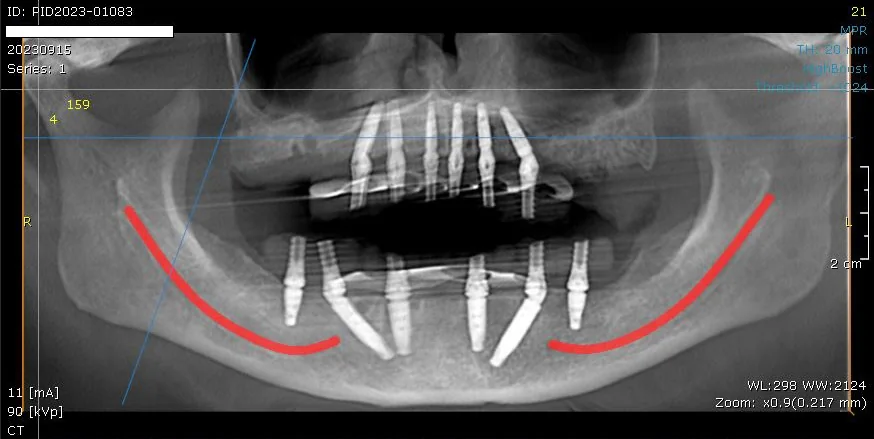
A five-year randomized trial compared switched and matching abutments on CAMLOG SCREW-LINE implants used for adjacent missing teeth in healed sites in the back of the lower jaw. From loading to five years, the average difference in change in bone level was 0.23 mm in favor of the switched group. Its 95% confidence interval ran from 0.03 to 0.43 mm.
Why the baseline changes the answer
Using the day of surgery as the starting point, the same investigators measured a 0.34 mm average difference at five years. Both calculations are legitimate. One includes changes during the interval between placement and loading. Reporting the starting date alongside the millimeters makes the two estimates intelligible.
What a radiograph leaves open
The researchers assessed bone beside the implant in two-dimensional images. That result addresses a local measurement in a selected group. Questions about chewing, need for repair, disease and survival require their own outcomes. Ask what feature the team is selecting for the proposed system and what evidence matches that use.