
Treatment illustration
At a glance
| Item | Question for the clinical team |
|---|---|
| Source material | What is the product and where does it originate? |
| Membrane | What is its role and is a removal visit planned? |
| Timing | Is grafting simultaneous or staged? |
| Assessment | What determines whether the site is ready? |
Identify the origin of each material
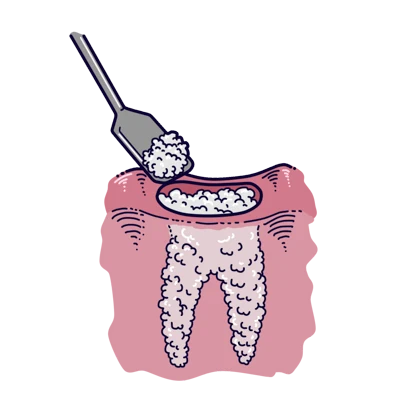
Autogenous material comes from the patient. Allogeneic material comes from a human donor, xenogeneic material from another species, and alloplastic products are synthetic. Some plans combine materials. For patients with concerns about donor source or animal-derived products, the exact product label is more informative than descriptions such as “natural” or “biocompatible.” Ask about both the graft and any membrane, since their origins can differ.
Understand the context of the graft
Grafting a small defect next to a proposed implant, preserving a fresh extraction socket and rebuilding a substantially deficient ridge are different indications. Depending on the defect, the clinic may discuss grafting alongside implant placement or waiting before placing the implant. A hospital’s example healing interval describes its approach to selected patients. The surgeon’s decision to proceed depends on reassessment of the individual site.
How the estimate should describe the procedure
Request separate entries for the surgical work, graft product, quantity, membrane and follow-up. Clarify whether the membrane is resorbable or whether the team expects a removal visit. Ask what records will identify the materials and which contingency applies if a different graft is needed. A more expensive source material or a larger purchased volume is not clinical evidence of a better restoration.