

Treatment illustration
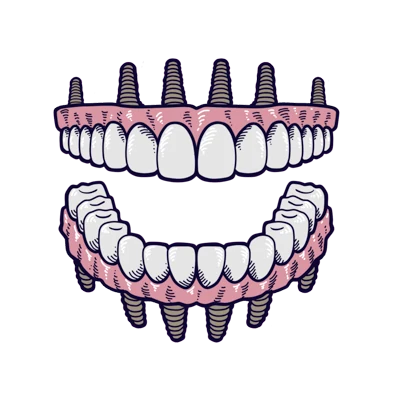
At a glance
| Design feature | What the written plan should show |
|---|---|
| Number of bridges | A single arch or named individual segments |
| Tissue replacement | Teeth alone or teeth plus artificial gum |
| Follow-up | Records and components for each section |
Three bridges or one continuous arch
In the published description of the branded 3-on-6 approach, six implants carry three bridges, typically an anterior section and two posterior sections. Other segmented designs can use a different number of pieces or fixtures. A six-implant full arch can also use one continuous restoration. The most useful drawing marks each support and the boundaries of each section, not just the number of new teeth.
What has been measured in patients
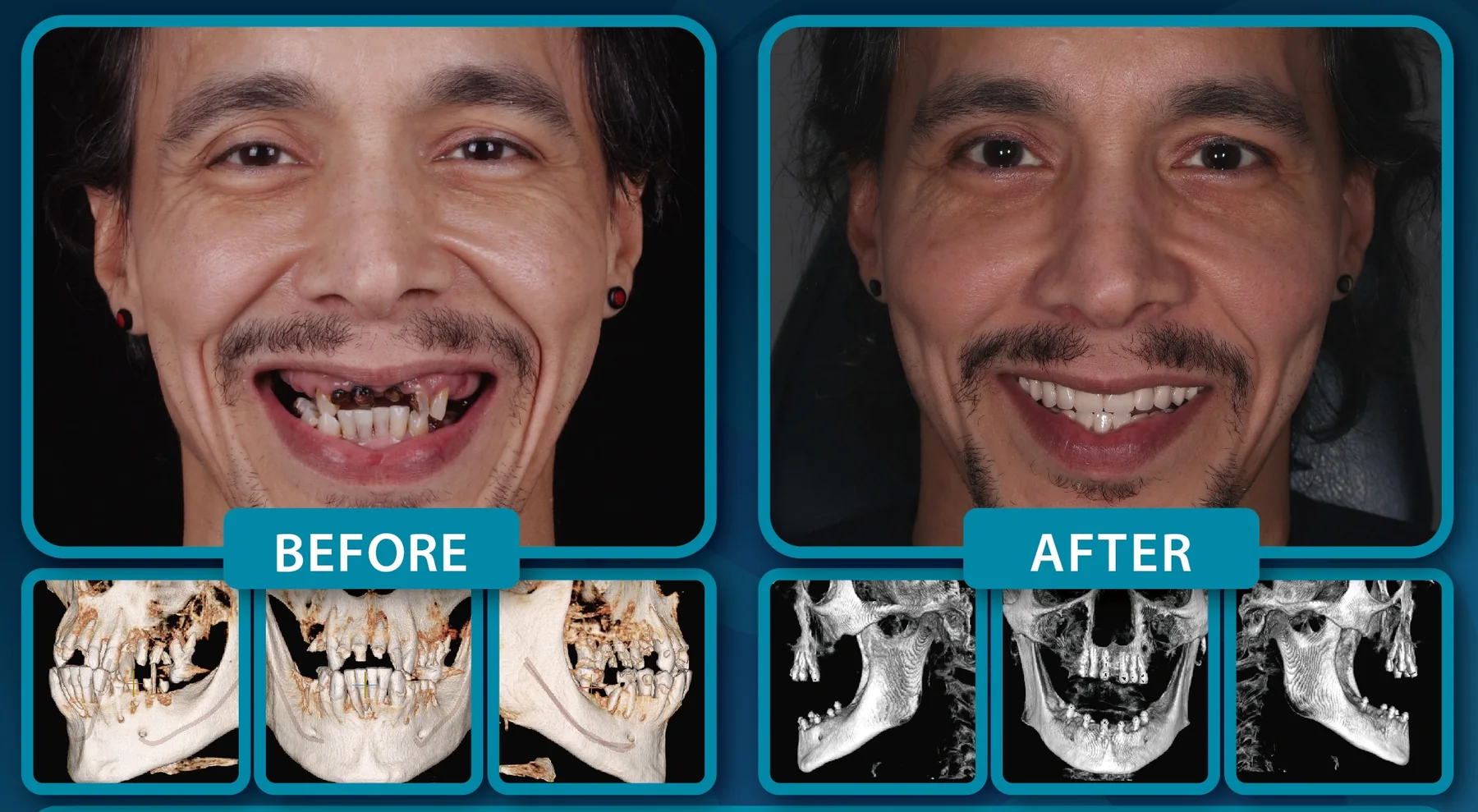
A preliminary retrospective series studied two- or three-piece lower-arch restorations in 14 people. At least six implants supported each reconstruction, and the series included 119 implants in total. All survived over an average follow-up of just over three years. The researchers reported no mechanical complications during observation but did identify biological complications. This small lower-jaw series had no one-piece comparison group and did not test every plan sold as 3-on-6.
How a repair would work
Ask the restorative dentist to walk through a practical example: if a posterior section chips, which screws, components, scans and laboratory files are needed to address it? Identify which fixtures support that section and whether work on it would affect adjacent pieces. Cleanability, tissue replacement, the opposing teeth and the service arrangements belong in the decision even when two proposals use the same number of fixtures.