

At a glance
| Information to update | Why it helps |
|---|---|
| Generic name and reason prescribed | Distinguishes the drug and the condition being managed |
| Dose, route and schedule | Identifies the actual regimen |
| Start date and last administration | Gives the team a timeline |
| Prescribing office and proposed dental work | Connects the clinicians making the decision |
Give the indication as well as the medicine name
Bisphosphonates and denosumab are used in different dosing regimens for osteoporosis and for some cancer-related bone conditions. The American Dental Association notes that medication-related osteonecrosis of the jaw is rare with osteoporosis regimens and that risk is higher with the doses and schedules used for cancer. A brand name alone can leave the dental team uncertain about that context.
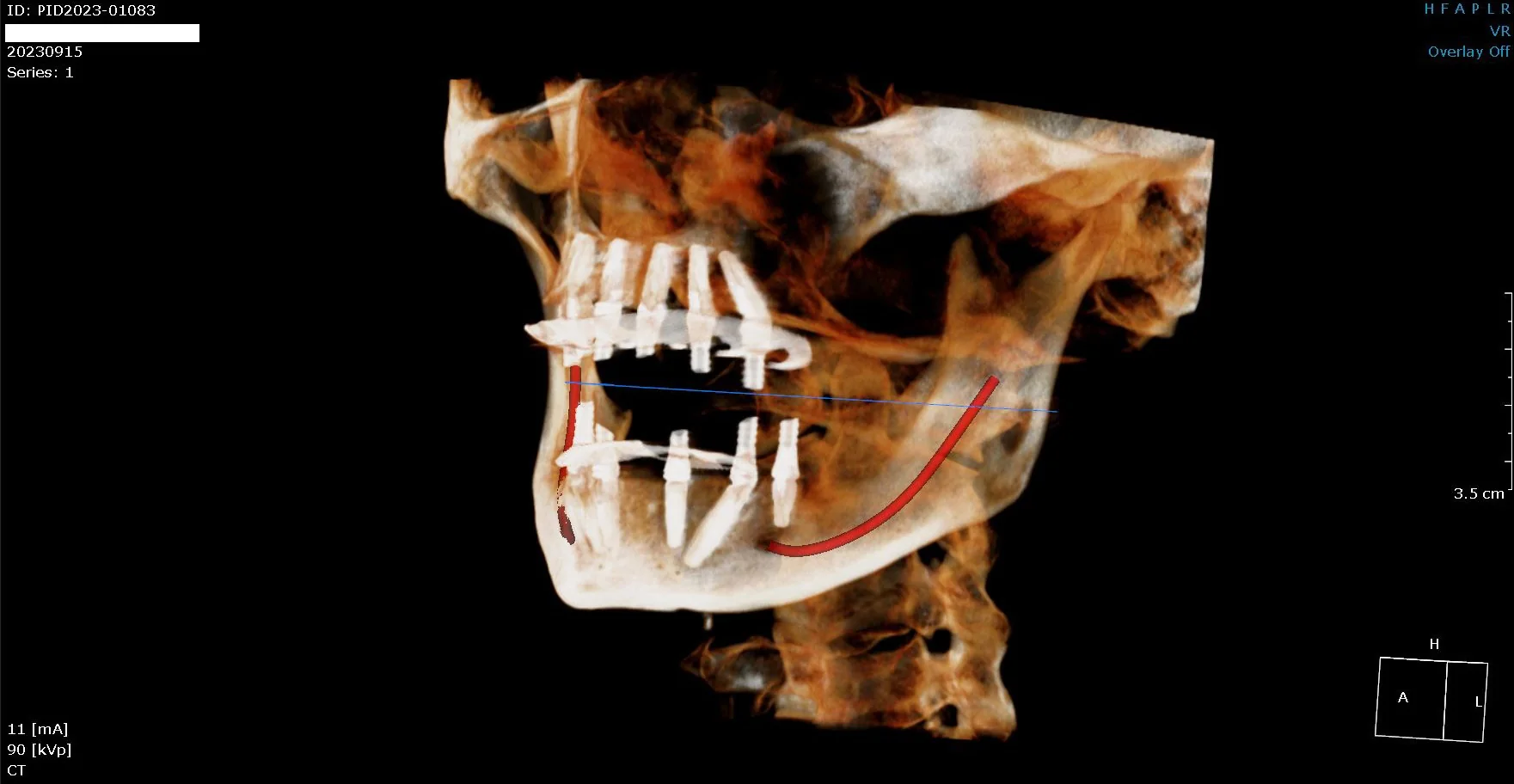
Match the discussion to the planned work
An ordinary maintenance visit and a proposed operation involving jawbone raise different planning questions. The oral surgeon’s position paper considers the medication schedule and duration, other illnesses and medicines, the extent of infection or inflammation, and the proposed procedure. Bring the prescriber’s contact information so the dental team can clarify an uncertain history before decisions about surgery.
Keep the medication decision with the prescriber
The ADA describes insufficient evidence for a routine drug holiday before dental treatment in patients taking osteoporosis antiresorptives. Changes to these medicines have consequences for the condition being treated. Discuss any proposed interruption with both the prescribing clinician and the dentist; the implant record is a place to document their coordinated plan, not a reason to skip a dose.