
At a glance
| At a review | What it can help the team assess |
|---|---|
| Changes in the gum | Inflammation and the response to a gentle professional examination |
| Recorded measurements | Changes since the previous examination |
| Earlier and current X-rays when indicated | Whether supporting bone levels have changed |
| The restoration itself | Home-cleaning access and any technical concerns |
Why a starting record matters
The European Federation of Periodontology recommends recording baseline measurements around implants after the prosthesis is delivered, and documenting the bone level on an appropriate baseline X-ray. At later reviews, the clinician can look for changes, assess inflammation and decide when further imaging is needed. Ask where those starting records are kept if you see a different dentist.
Two conditions with different findings
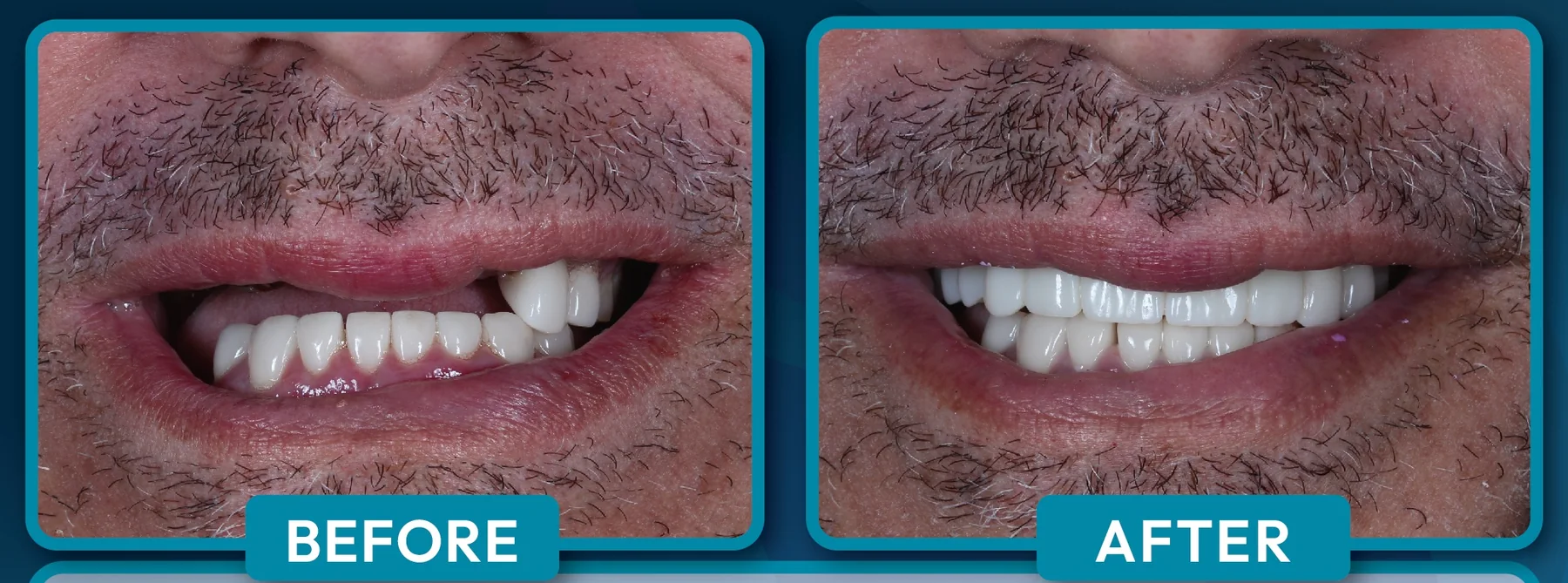
Peri-implant mucositis describes inflammation of the soft tissue around an implant. Peri-implantitis includes inflammation with progressive loss of the supporting bone. A clinician considers examination findings and bone changes together. Bleeding that you notice is a reason to discuss the site with the dental team. A photo alone cannot establish which condition is present.
Make maintenance work with your restoration
Ask your clinician to demonstrate how to reach the surfaces around your particular crown, bridge or denture. Tell the team if a part is difficult to reach or the technique is uncomfortable. Have a plan for routine reviews with the team responsible for maintenance, including how to contact them if symptoms develop between visits.