At a glance
| Outcome | What it counts |
|---|---|
| Implant survival | Whether the implant remains present under the study definition |
| Prosthesis survival | Whether the crown, denture or bridge remains in service |
| Study-defined success | Whether the implant also meets the authors’ specified clinical criteria |
| Patient-level loss | People experiencing at least one implant loss |
| Mechanical complication | A technical problem, which may be repairable |
Find the denominator
In a Swedish study, 154 of 11,311 implants were lost before the restoration was attached, about 1.4%. At least one early loss occurred in 121 of 2,765 patients, about 4.4%. Both describe the same events. One person can have several implants, so the second question counts each affected person once.
Lance’s new smile
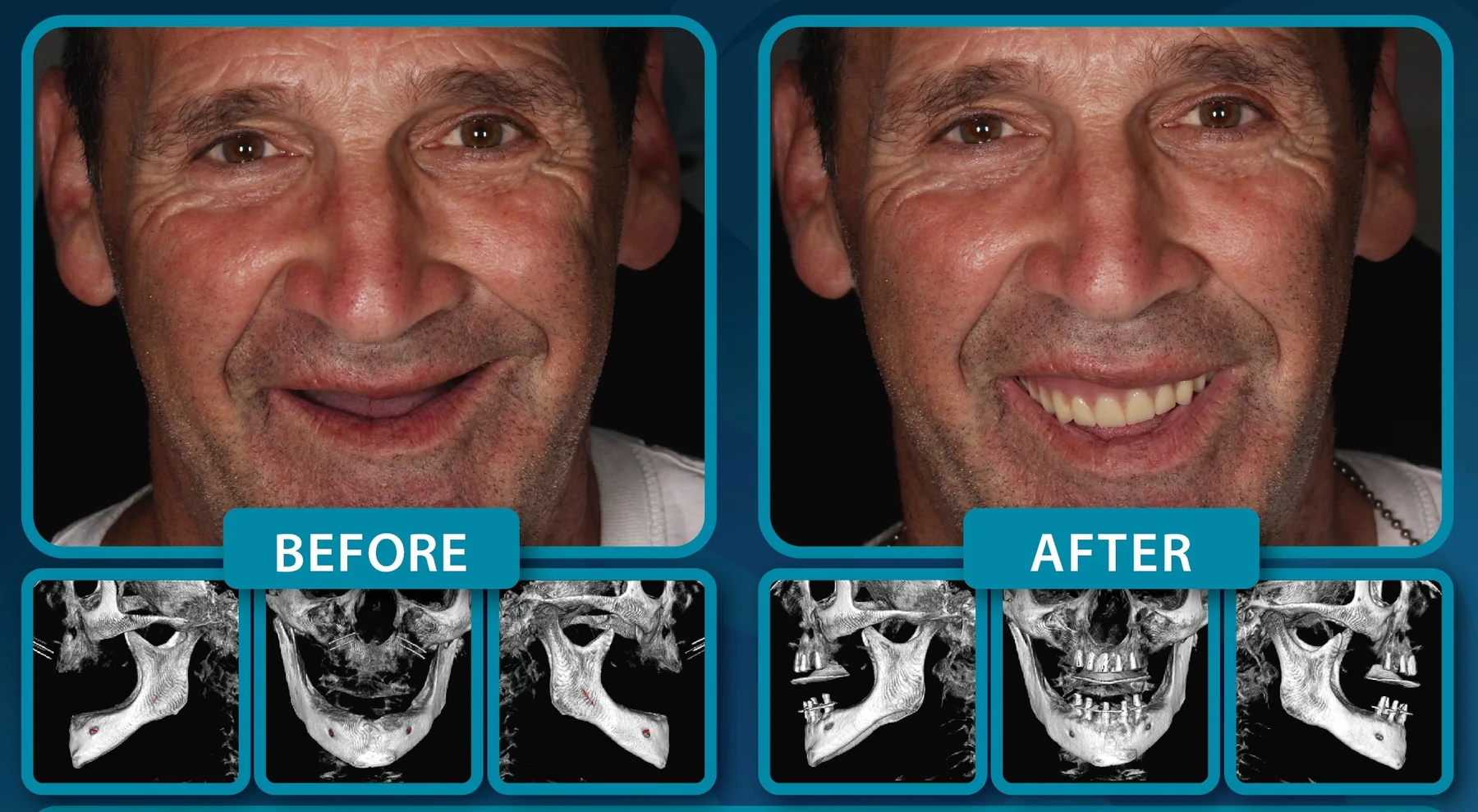
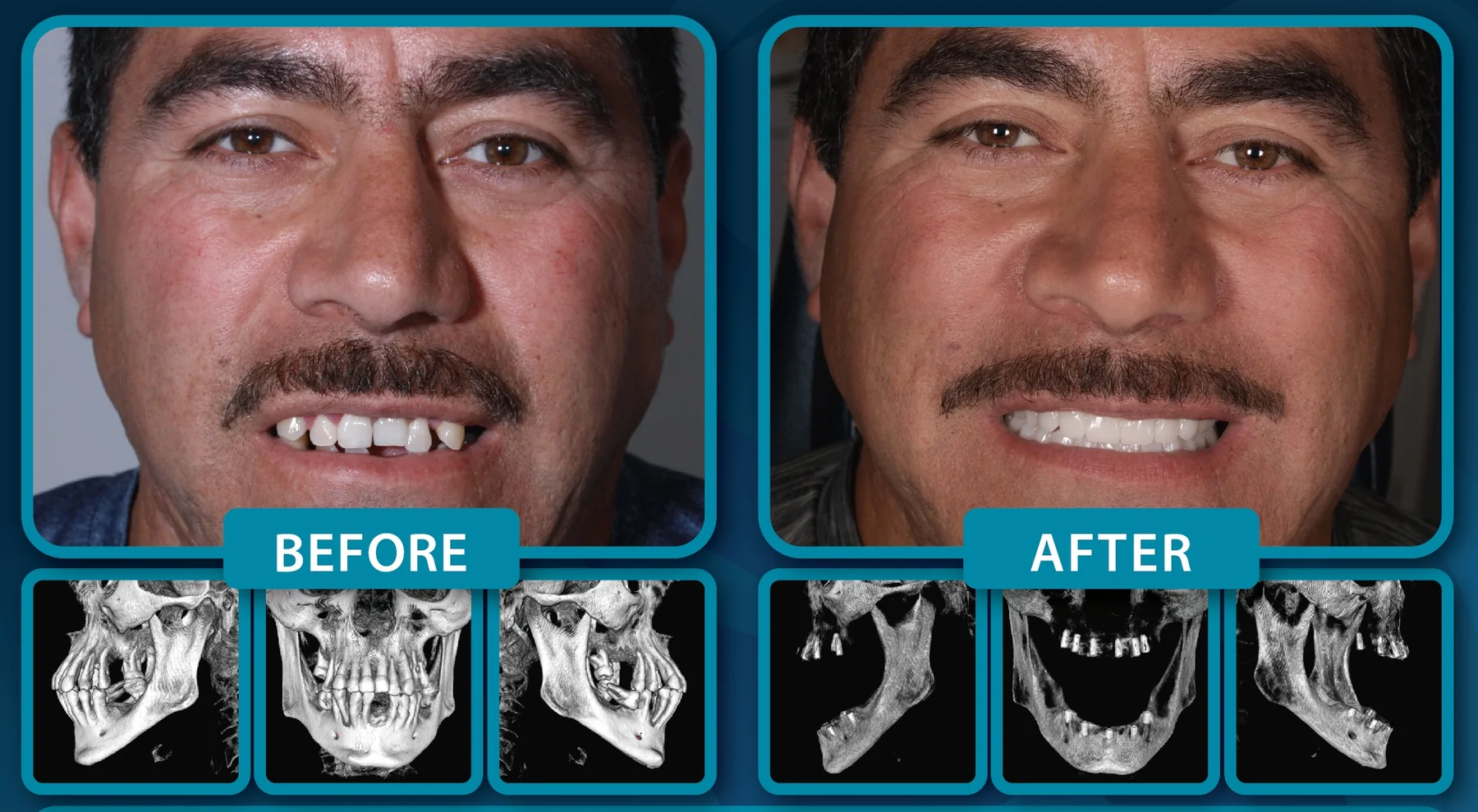
Lance’s full-arch case, photographed from the front and both sides before treatment and again with his new teeth.








Read the outcomes side by side
A Portuguese retrospective series followed 471 people who received fixed lower bridges supported by four implants. Across follow-up of 10 to 18 years, the authors estimated 98.8% prosthesis survival, 93% implant survival and 91.7% implant success under their criteria. They also recorded mechanical complications. A bridge can remain in service after a repair.
Check who reached the last visit
In that lower-arch series, 149 patients were lost to follow-up and another 27 died. A cumulative estimate uses information collected while participants were observed. It cannot tell us exactly how every missing participant fared. Ask for the study population, location of treatment and number still observed when reading a long-term percentage.