
At a glance
| Useful detail | Example for the call |
|---|---|
| Timing | “This started today” or “the bite has changed gradually.” |
| Site and restoration | “Upper left, at the back of a fixed bridge.” |
| Other changes | Pain, swelling, a new gap or a fragment that came away |
| Treatment stage | Temporary tooth, completed crown or final bridge |
What can move?
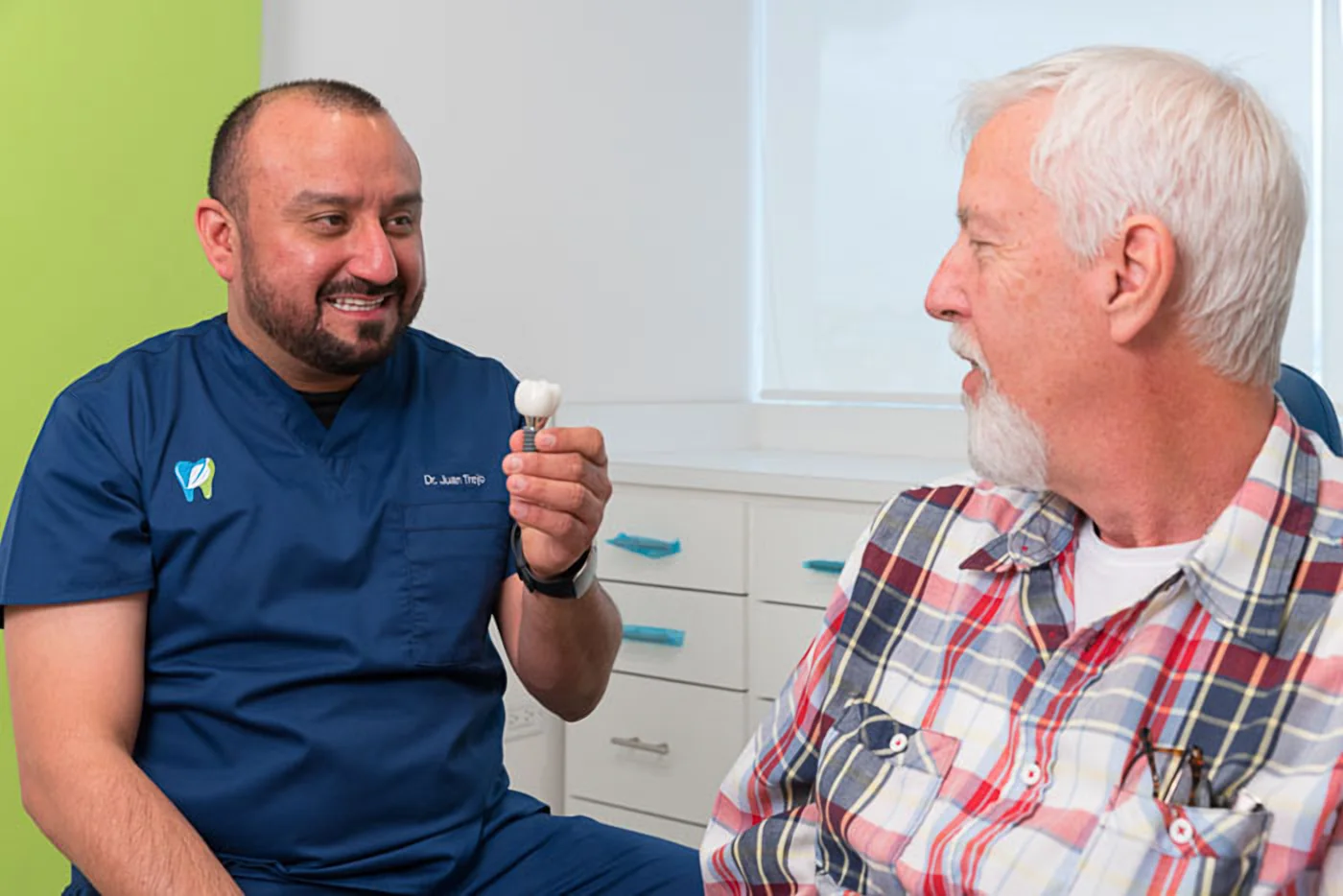
A typical implant-supported tooth contains an implant body in the bone, a connecting abutment and a visible restoration. Some restorations include another fastening screw. Looseness can involve the restoration or its fastening; the implant body itself can also lose stability. A description such as “my tooth shifts when I bite” gives the office a starting point. Examination is needed to locate the moving part.
What to tell the office
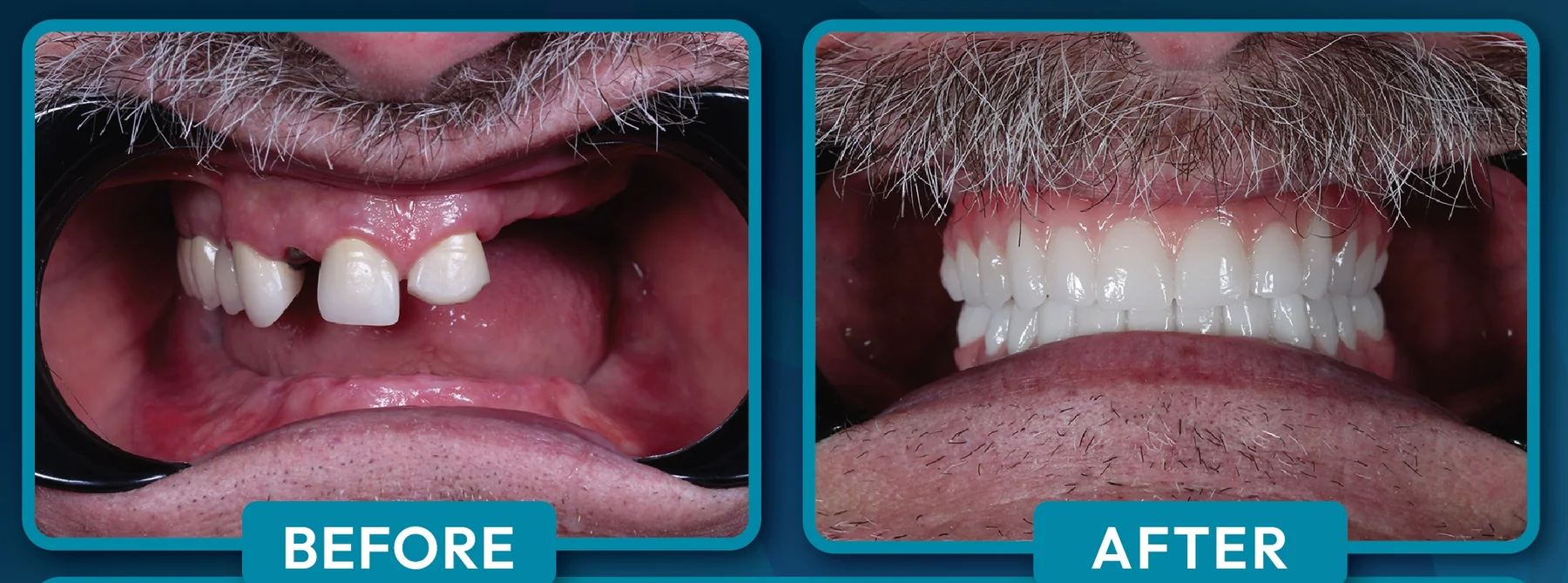
Give the location, when you first noticed a change and whether there is pain, swelling or a change in your bite. Tell the office if a part has already come away and whether the teeth are a temporary or final restoration. Include the original practice’s contact and any available records. Avoid testing the movement or trying to tighten the parts yourself.
What the clinical review can establish
A dentist can assess the bite, restoration, connections and tissues around the implant. A visible break or loose screw can lead to a different repair from movement of the implant body. For a long bridge, the area where you perceive motion may also differ from the component that needs attention. Ask which component the clinician identified and have the repair entered in your record.