
At a glance
| Term | Location or purpose |
|---|---|
| Abutment screw | Secures an abutment in the assembly specified by the system |
| Restorative screw access | Lets the clinician reach the relevant screw |
| Cement margin | Boundary where a cement-retained crown meets its abutment |
| Extraoral bonding | Laboratory or chairside bonding outside the mouth |
Locate the joint
For a screw-retained crown, the restorative team accesses a screw through the restoration. For a cement-retained crown, the crown is cemented onto an abutment. Some laboratory workflows bond a crown and base together outside the mouth before delivery. Specify which joint the words “cemented” or “screwed” describe.
What studies say about cement
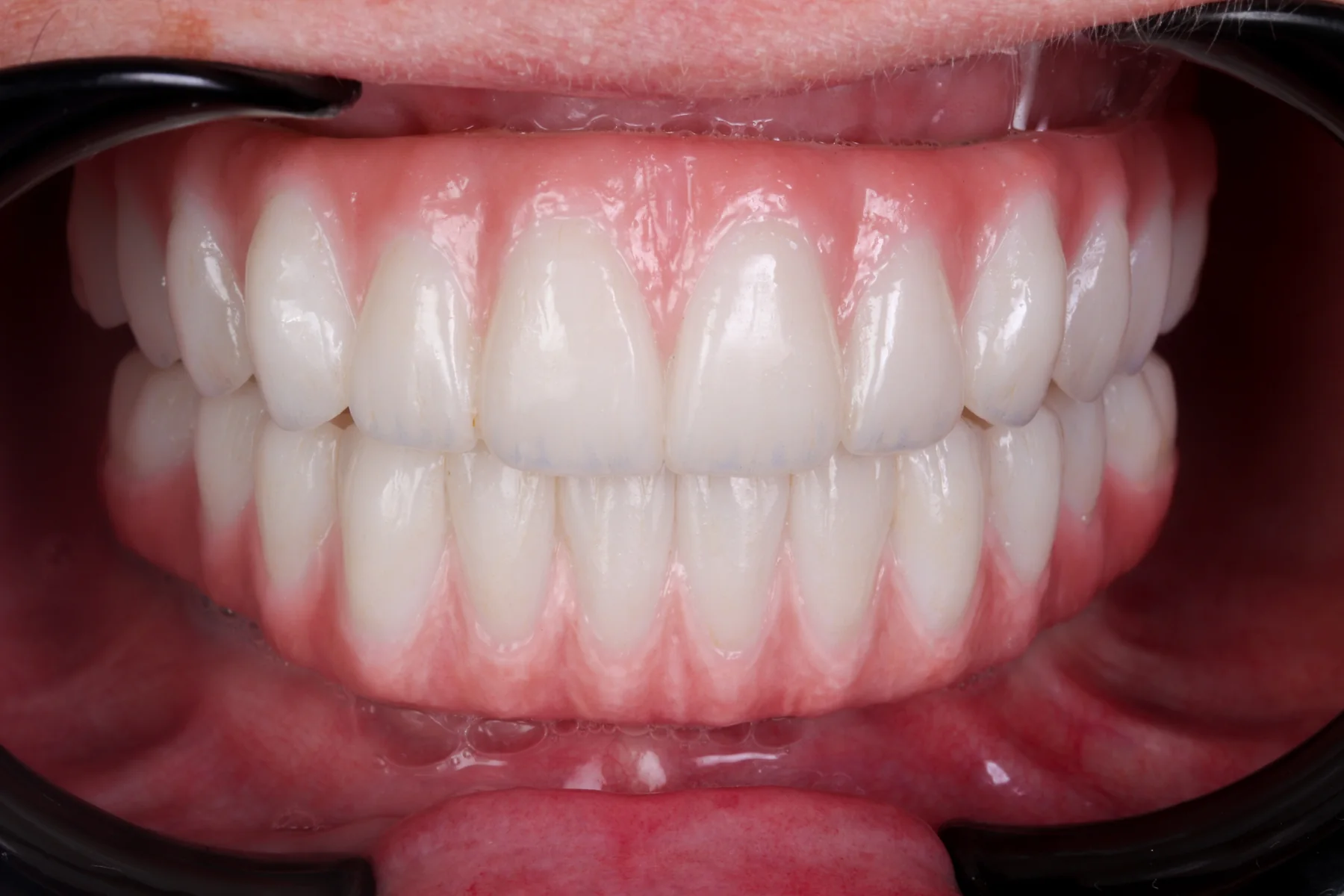
A systematic review identified residual cement as a possible risk indicator for disease around implants. It covered very different study designs and patient groups. The exposure in question was cement left around the restoration in the mouth. Applying those findings to every restoration containing a bonded joint would change the meaning of the evidence.
The maintenance question
Ask the restorative dentist how the proposed crown would be accessed for an examination or repair, where the margin will sit and what information another dentist would need. For a bridge, also ask whether individual teeth or the whole assembly would need attention.