
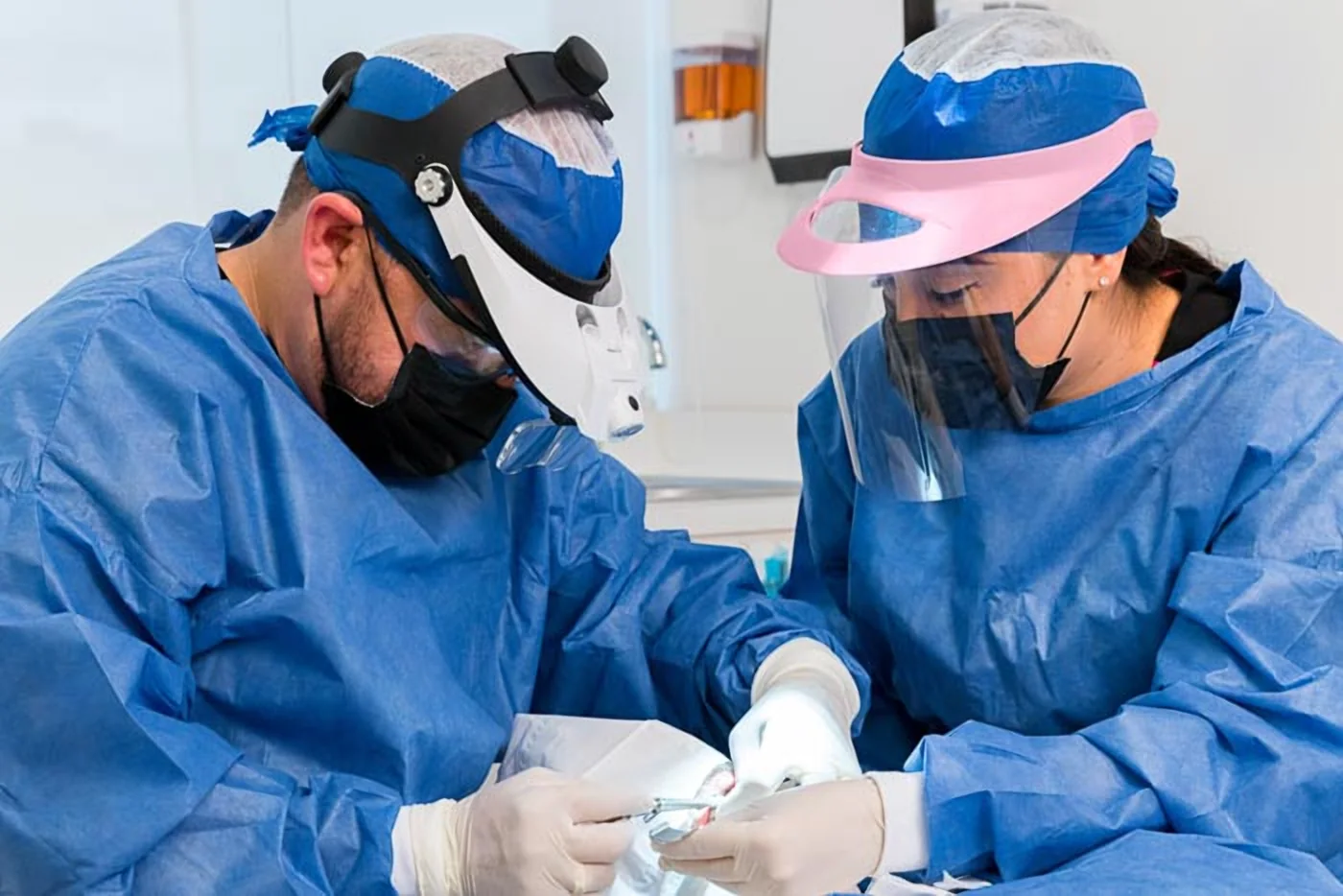
Treatment illustration
At a glance
| Plan or evidence item | What to establish |
|---|---|
| Anatomy | Which upper-jaw regions lack usable support |
| Design | Number of zygomatic and conventional fixtures |
| Restoration | Provisional and final bridge design |
| Follow-up | Surgical, prosthetic and sinus-care arrangements |
Why a specialist may propose cheekbone anchorage
Many implant plans rely on the tooth-bearing ridge. When that ridge has lost substantial bone, rebuilding it or seeking support in another region changes the scale of treatment. The ITI consensus identifies severe upper-jaw deficiency as a principal indication for zygomatic implants. That distinction matters when comparing a quote labeled “graftless” with a routine fixed-arch package. The two treatment groups may start from very different anatomy.
What “quad” adds to the description
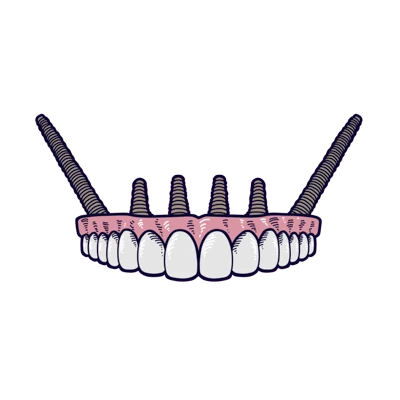
A quad-zygoma reconstruction uses four zygomatic implants. Other reconstructions combine zygomatic and conventional implants where suitable support remains. Ask for a diagram identifying each planned fixture and its role in the definitive teeth. Also ask who evaluates sinus health, who makes the provisional restoration, and how the plan changes if immediate loading proves inappropriate.
Read survival alongside sinus complications
The 2023 ITI review reported pooled long-term implant survival of 96.2% over a mean of about 6.3 years. In the synthesis focused on sinusitis, prevalence was 14.2% at a different mean follow-up. These figures describe different outcomes and data sets. The percentages cannot be subtracted to estimate how many people were complication-free. Ask what follow-up is available for sinus symptoms and who can service the particular bridge if you live elsewhere.