
At a glance
| Detail to record | Example from the research |
|---|---|
| Stage | Interim complete arch |
| Clinical comparison | Milled PMMA and a particular printed hybrid ceramic resin |
| Time exposed | Three months per material in each participant |
| Separate outcomes | Complications, passive fit, color and patient experience |
A trial in which everyone wore both bridges
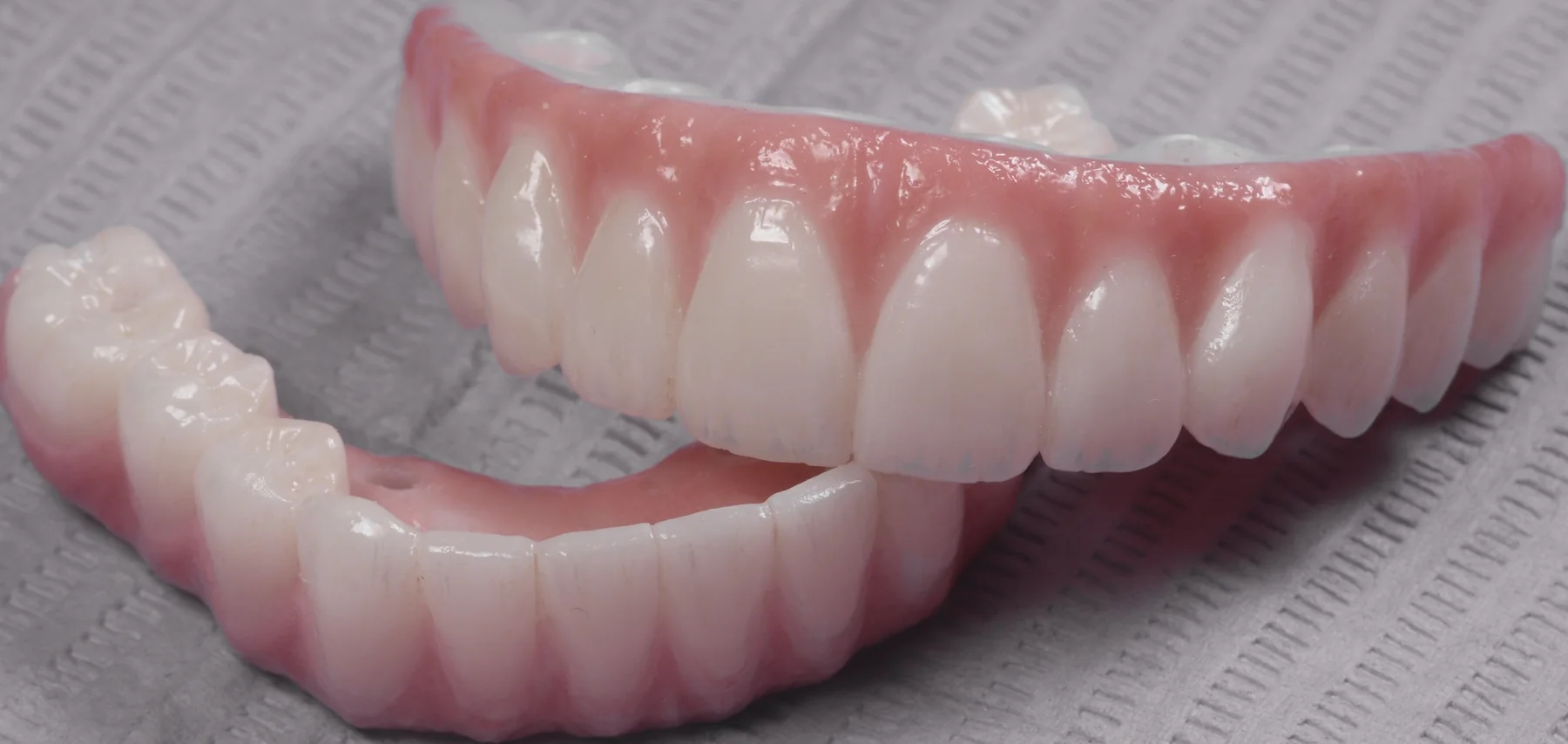
Twenty adults with an edentulous arch each wore a milled polymethyl methacrylate (PMMA) interim and a printed hybrid ceramic resin interim. The researchers randomized the order. Each bridge was used for three months. Having the same person try both materials helps account for lasting differences between people, such as their jaw anatomy. The short observation window suits the question of temporary teeth.
When the results point in different directions
Mechanical complications occurred during 10% of the milled-PMMA periods and 45% of the printed-resin periods. The trial found no statistically significant difference in the assessment of passive fit or in the overall color-change measure. The two observations can coexist. A restoration can fit its supports when fitted and subsequently need a repair during use.
The blank, the resin and the geometry
A separate bench experiment compared milled and heat-processed PMMA with simulated supports. Changing the coping design changed where specimens failed. “Milled” describes a process. A meaningful comparison also identifies the material formulation, support arrangement and screw-access design. Ask which temporary material is in the quotation, how long it is intended to serve and who handles a repair before delivery of the final teeth.