
At a glance
| Part or description | What to identify |
|---|---|
| Implant body | Exact product and body material |
| Abutment or connector | Separate component or integrated into the body |
| Crown or bridge | Material of the visible restoration and any underlying framework |
| Clinical evidence | Exact design, restoration, follow-up time and endpoint |
Locate the material in the restoration
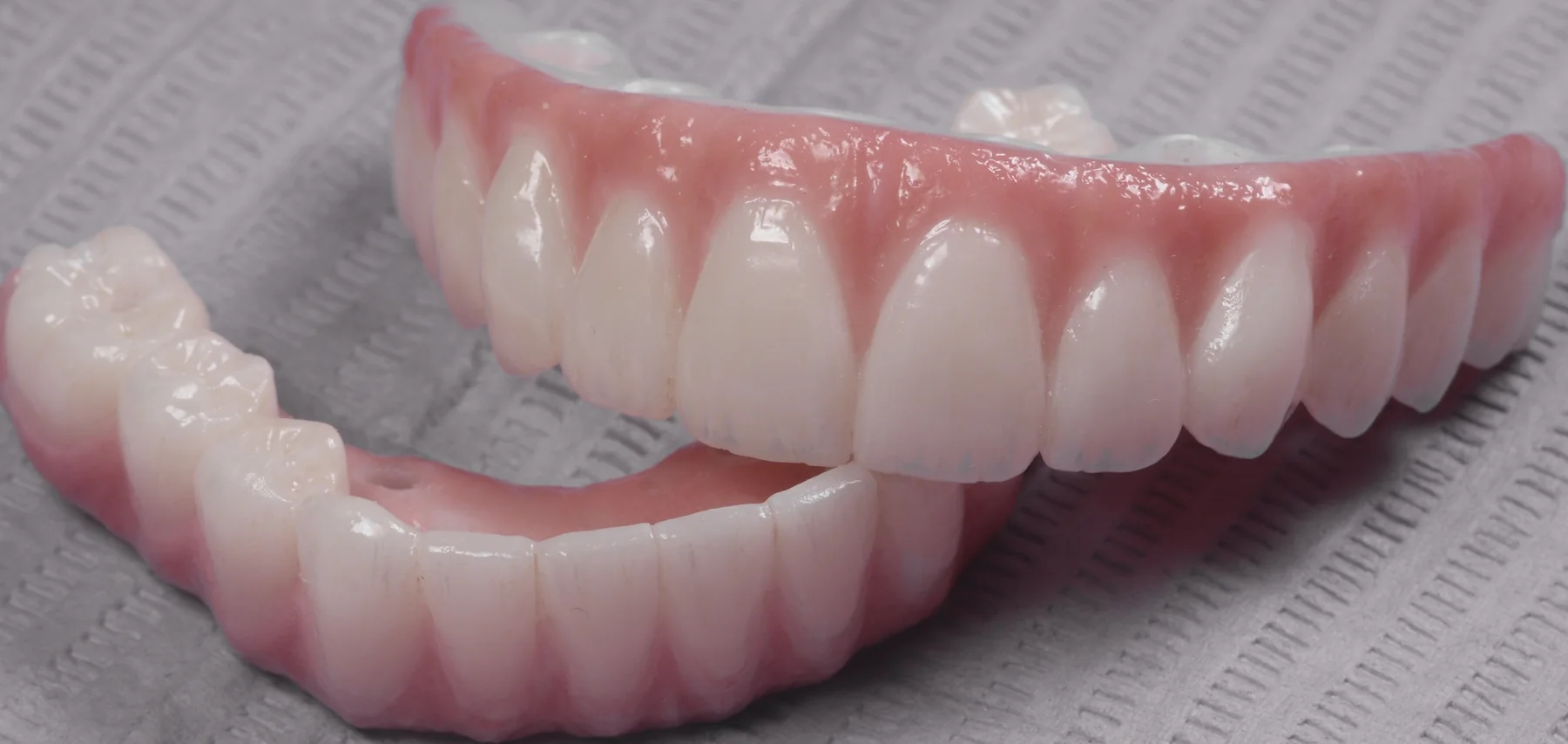
An implant body anchors the restoration in bone. An abutment connects that body to the replacement tooth in a two-piece design. The crown is what you see. Ask the clinic to write the material beside each component on both quotes. If the quote lists a titanium–zirconium alloy, that is a metal alloy. Zirconia is a ceramic made of zirconium oxide.
What five-year zirconia studies measured
An International Team for Implantology consensus reported a five-year mean survival estimate of 97.2% across six clinical cohorts (95% confidence interval 94.7% to 99.1%). Most observations involved one-piece zirconia implants supporting single crowns or short, three-unit bridges. Only one retrospective cohort investigated a two-piece design. A full arch on a newer two-piece system therefore requires its own evidence.
How to compare two proposals
Request the exact model and whether it is one or two pieces. For each option, ask which clinical study followed that design and what kind of tooth replacement it supported. If avoiding a particular substance matters to you, ask for the composition of the screws, connectors and framework as well as the implant body.