

Treatment illustration
At a glance
| Record | Why keep it |
|---|---|
| Bar or individual attachments | Describes the geometry that retains the denture |
| Jaw and support count | Allows an appropriate research comparison |
| Retention components | Helps a future dentist identify service parts |
| Maintenance terms | Distinguishes an adjustment from a new denture |
What remains in the mouth
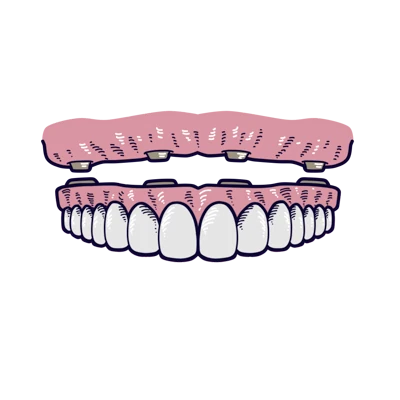
With solitary attachments, each implant has its own connection to a matching element inside the denture. With a bar, the implants support a joined structure, and the removable denture engages that structure. When reviewing a diagram, ask the dentist to identify the parts that stay in the mouth, the ones in the denture and those expected to need replacement. The words “snap-on” can refer to more than one assembly.

Why the upper and lower jaws need separate evidence
A 2018 Cochrane review found six eligible lower-jaw trials with 294 dentures and no eligible upper-jaw trials. It could not establish a generally superior attachment from that evidence. A later five-year randomized study specifically enrolled upper-denture patients treated with four implants. The bar group had less average marginal bone change and higher implant survival than the solitary-attachment group, while patient-related outcomes were similar. Trial dates, jaw and number of supports explain why these two sources answer different questions.
Compare the work of living with each design
Ask for a demonstration with a model of the exact attachment being proposed. Discuss the access available for cleaning under the bar or around individual attachments, the ease of removing and seating the denture, and the price of worn retention components. The attachment brand and reference numbers will help a future practice identify the right parts if the fit changes.