
At a glance
| Label encountered | Component or observation |
|---|---|
| Zirconia implant | Fixture supporting the restoration |
| Zirconia framework | Load-bearing part of this crown |
| Feldspathic veneer | Outer ceramic layer in the reported cohort |
| Technical success | Assessment that includes condition of crown surfaces and margins |
Three materials can share one tooth position
The study enrolled 45 patients with single posterior crowns on zirconia implants. Each crown had a zirconia framework layered with a leucite-reinforced feldspathic ceramic. The crown surface, its supporting framework and the implant body were separate components. An advertisement saying “zirconia implant crown” leaves open which of them the descriptor applies to.
A crown can stay in place after losing technical quality
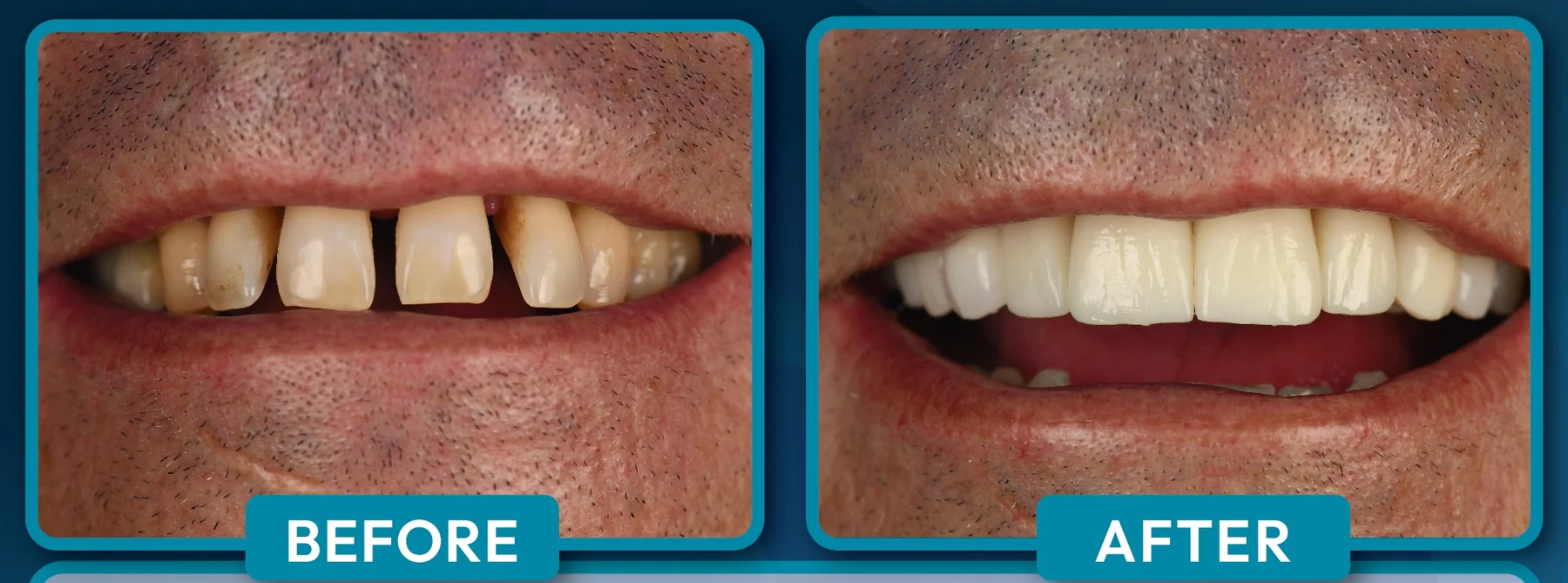
Thirty crowns could be examined at 7.5 years. The estimated crown survival was 97.5%, while technical success was estimated at 79.4%. Assessors recorded issues including major chipping, rough chewing surfaces and a marginal crevice. Patients’ reported functional and aesthetic experience remained favorable. A patient questionnaire and a professional examination can capture different aspects of the same restoration.
What transfers to another design
This was a cohort of layered posterior crowns, without a randomized monolithic comparison group. Its follow-up does not establish the repair rate of a single-material crown, a zirconia full arch or an acrylic bridge. For a personal restoration record, ask for the crown construction, tooth position and what the clinic means by a repair, replacement or polished adjustment.