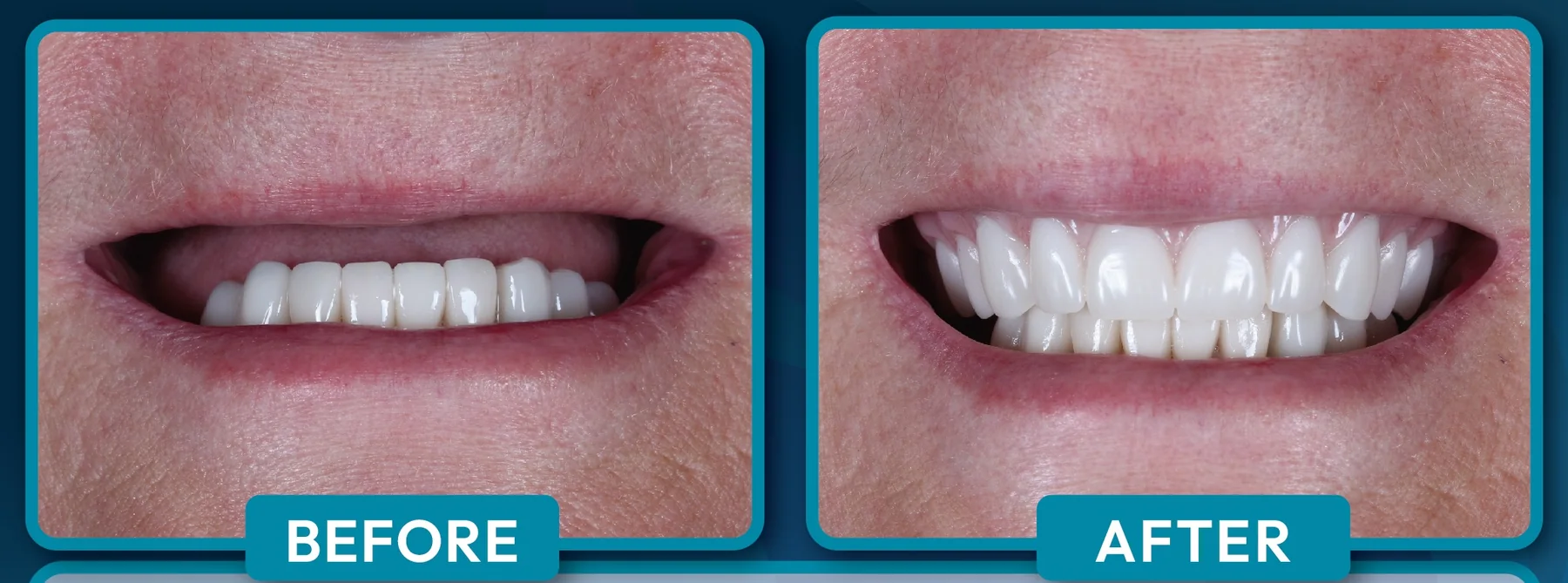
Treatment illustration
At a glance
| What to compare | Metal-acrylic example | Zirconia example |
|---|---|---|
| Bridge construction | Metal structure and acrylic elements | Monolithic or layered zirconia with specified interfaces |
| Study endpoint | Can track bridge survival and repairs | Must use the same endpoint for comparison |
| Service arrangements | Identify replaceable elements and laboratory | Identify repair, polishing or remake policy |
Read the laboratory description by component
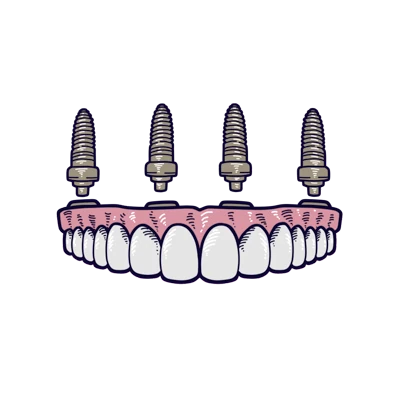
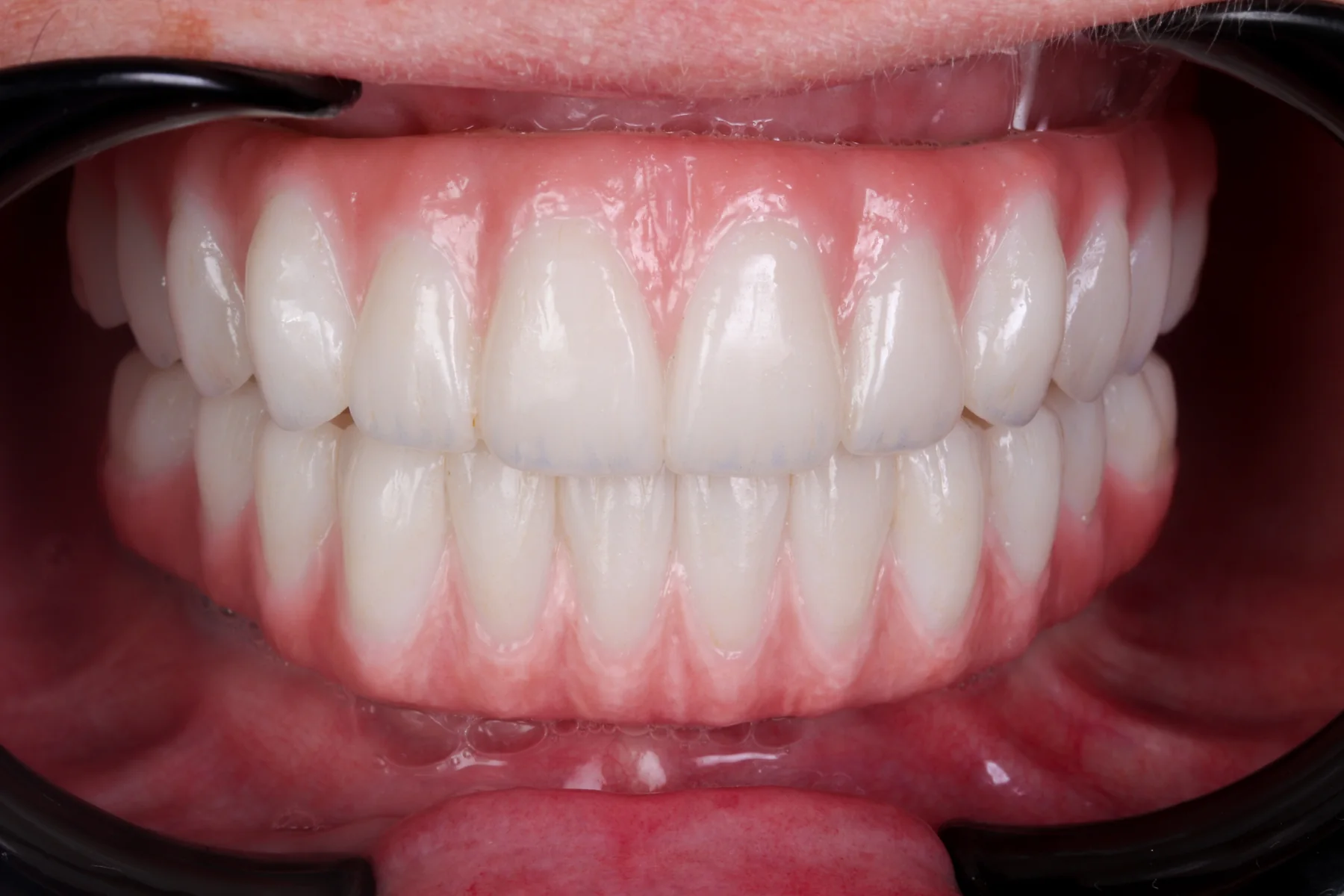
A metal-acrylic arch combines a metal substructure with acrylic elements. A zirconia-based arch may be predominantly monolithic or may include layered ceramic on part of the restoration. Interfaces and screws can still be metallic. Ask for a component-by-component description before assuming that a “zirconia arch” tells you the implant body material, the precise construction or which components can be replaced individually.
How long-term evidence counts a failure
A retrospective comparison included 74 arches, 43 metal-acrylic and 31 zirconia, followed for an average of 8.7 years. The investigators reported higher estimated five-year prosthesis survival in the zirconia group. Isolated tooth chipping or fracture occurred in both groups. Implant failure and peri-implantitis did not differ in that series. Because patients were not randomly allocated to materials, those findings cannot isolate material from the selected cases, designs, laboratories and maintenance provided.
Price the repair pathway as well as the original bridge
Ask what the team would do for surface wear, a chipped tooth or a fractured framework. These events involve different tasks and may have different financial arrangements. Request the laboratory’s name and a description of any backup restoration during a remake. A quote for a definitive arch is easier to interpret when it specifies the construction, clinical labor, laboratory coverage and follow-up for the opposing teeth.